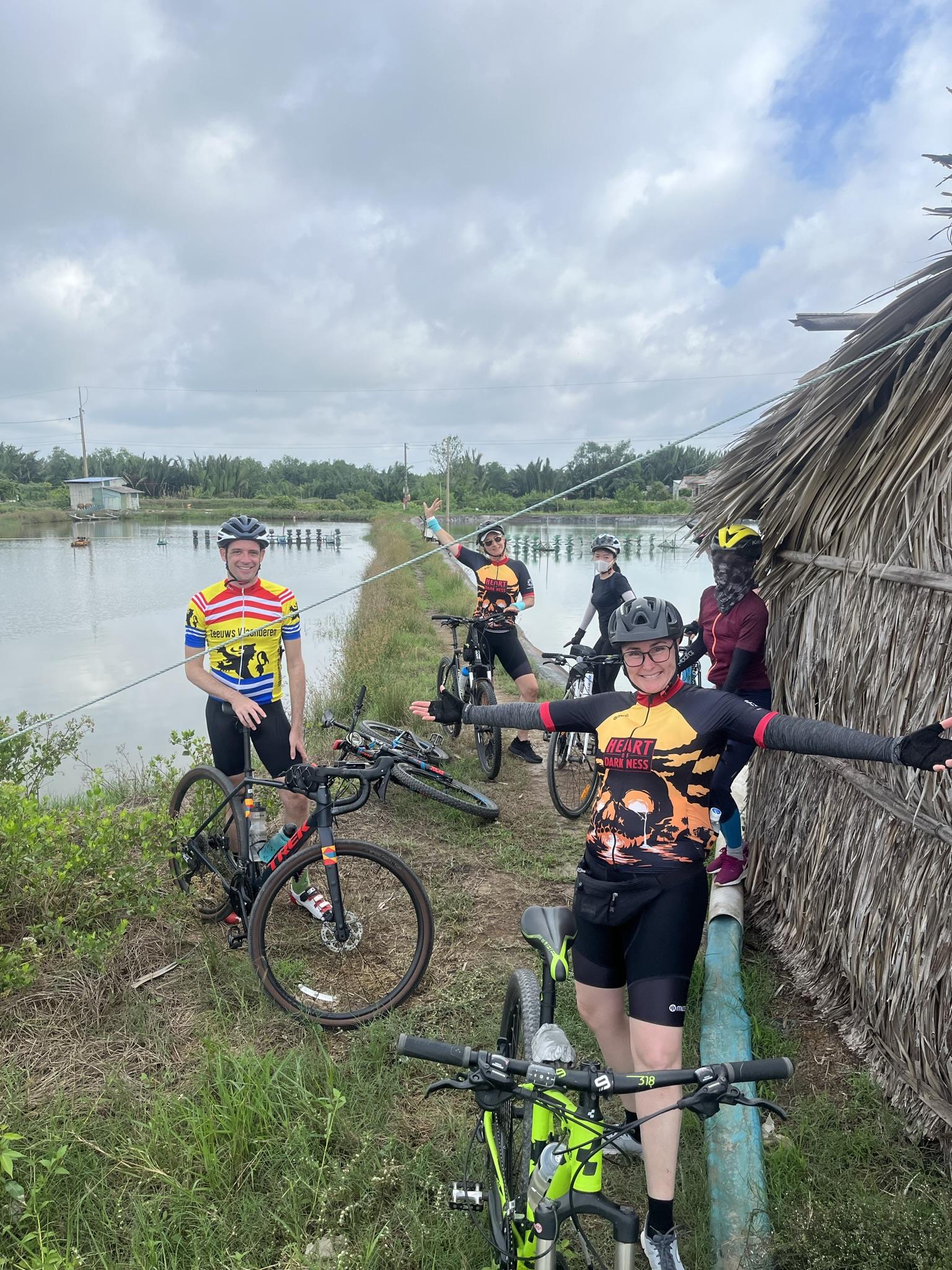
Page Banner

Essential Tour Information

A field guide for riders heading to Vietnam

Everything to know before you pedal a single mile.

From visas and vaccines to bike fit and dinner table etiquette — this is the full trip-planning guide, organized into six chapters so you can read it start to finish or jump straight to what you need.

Authentic
Caring
Responsible
Sustainable
Chapter 01

Before You Depart

Why cycle Vietnam, when to go, and the paperwork to sort out first.

Why join a cycling tour to Vietnam?

Cycling through Vietnam offers a front-row seat to some of Southeast Asia's most dramatic scenery, taking you from sweeping mountain passes down to emerald-green rice terraces.

Cycling trades looking through the windows of a tour bus for an immersive journey across rural backroads and vibrant coastal lowlands. Whether you're navigating quiet village lanes or taking on rolling hills, the country's road networks and diverse terrain balance challenge with accessibility for every rider.

Beyond the views, a bicycle trip opens up the everyday warmth of Vietnamese culture that most travelers miss entirely. Your route naturally winds past bustling local markets, ancient temples, and tranquil farming settlements where you can pause to sample world-famous street food or chat with welcoming residents. Blending historical depth in Hoi An, Hue and Hanoi with the peaceful rhythm of the countryside, a cycle journey delivers active adventure and authentic cultural discovery in one trip.

When to visit

Vietnam has a tropical climate with two distinct seasons: wet and dry. Overall, the best times to visit are February to April and September to early December, when temperatures are moderate and rainfall lower — though this varies by region.

Northern Vietnam

Hanoi, Halong Bay, Sapa — four seasons: cooler winters (Dec–Feb) with light drizzle in the mountains, hot humid summers (May–Aug) with heavy rain and occasional typhoons. Aim for Mar–Apr or Sep–Nov.

Central Vietnam

Hue, Da Nang, Hoi An — rainy/typhoon season Oct–Dec, hottest Jun–Aug. Visit Feb to early Aug. Higher typhoon risk mid-Sep to end-Oct, best avoided.

Southern Vietnam (Ho Chi Minh City, Mekong Delta) is tropical with a dry season (Nov–Apr) and wet season (May–Oct) — dry months suit outdoor activity best, though the wet season still brings warmth and lush landscapes. Rain tends to fall in the afternoon; mornings are generally dry.

Tet Lunar New Year — Vietnam's biggest holiday (e.g. 16–20 Feb 2026). Businesses close, sites get busy, and transport books out fast. Your trip leader will flag any schedule changes early.
Wet season note — flooding is common roughly Jun–Dec and can bring landslides; the HaLong Bay cruise can shift at short notice for safety, most often Oct–Apr.
Average climate
Month Hanoi °C Hue °C Ho Chi Minh City °C
Jan21–1523–1732–22
Feb22–1724–1833–23
Mar24–1927–2034–24
Apr28–2231–2235–26
May33–2533–2434–26
Jun34–2734–2533–25
Jul34–2734–2532–24
Aug33–2634–2432–24
Sep32–2631–2332–24
Oct29–2328–2232–24
Nov27–2026–2131–23
Dec22–1524–1832–22

Rainfall and humidity figures are available on request — the table above shows temperature ranges to plan your kit around.

Passport, visa & entry requirements

Passport
  • Valid at least 6 months beyond arrival date
  • Minimum 2 blank pages labeled "Visas" (not "Amendments and Endorsements")
  • Extra pages if adding a stopover: +2 for Bangkok, Doha, Istanbul, Singapore; +1 for Denpasar, Dubai, Hong Kong, Seoul, Taipei, Tokyo
  • Good condition, no water damage
  • Name must match your passport exactly — used for domestic train tickets too
Visa-free exemptions

45-day visa-free: UK, France, Germany, Italy, Spain, Russia, Japan, South Korea, Norway, Sweden, Denmark, Finland, Belarus.

ASEAN citizens: 14–30 days depending on country. US and Irish passport holders normally need a visa — always check current rules for your nationality.

e-Visa (if not exempt, or staying 45+ days)
  • Open to citizens of all countries
  • Valid up to 90 days — single or multiple entry
  • 3–5 business days processing, US$25 / US$50
  • Apply only via evisa.gov.vn or thithucdientu.gov.vn
Online Arrival Declaration — all air arrivals must complete Vietnam's Pre-Arrival Information form within 72 hours at prearrival.immigration.gov.vn, even visa-exempt travelers (select "Unilateral Exemption").
Before you fly
  • Confirm passport expiry and blank "Visas" pages
  • Apply for e-Visa 1–2 weeks ahead
  • Complete the Pre-Arrival declaration within 72 hours of flying
  • Print your approved e-Visa

Vaccinations & medications

No vaccines are officially required for entry. Discuss with a doctor or travel clinic ahead of departure: hepatitis A, typhoid, tetanus, polio, diphtheria, hepatitis B, and rabies (cycling raises the odds of an animal encounter).

Mosquito-borne illness: malaria risk is generally low (anti-malarials mainly relevant for a Cambodia extension). Dengue and Zika are present with no vaccine available — use repellent and light, long clothing, especially in the rainy season.

Cycling hydration: riders lose 500–1,000ml of water per hour, even on cool days. Drink small amounts regularly rather than waiting until thirsty; electrolytes help replace lost salts.

Local alcohol caution — stick to sealed, reputable brands and licensed venues to avoid methanol poisoning risk from counterfeit spirits.

Pack medication in your carry-on, in original labeled containers, with prescription copies using generic drug names — and check destination restrictions before you fly.
Chapter 02

Fitness & Bike Preparation

How hard the riding is, how to train for it, and the bikes you'll ride.

Fitness levels & trip difficulty

You should comfortably cycle 30–80km a day in a tropical climate. The trip is rated a moderate 3 out of 7: mostly well-paved, flat roads with some undulation, aside from steeper climbs in the Dalat highlands and Hai Van Pass. A support vehicle travels with the group throughout, so you can ride as much or as little as you like on any given day.

Preparing for the trip

The more preparation, the more you'll enjoy it. Aerobic exercise beforehand — jogging, swimming, and ideally cycling — helps, as does a few extended rides or time on a gym exercise bike. Confidence and competence riding solo and in a group both matter.

Regular rest breaks happen daily, but you'll ride multiple consecutive days in unfamiliar terrain and climate — ease in for the first few days rather than starting hard and fast. Daily distances in any itinerary are a guide only; riding is generally daylight hours only.

Physical requirements

  • Not suitable for reduced mobility, wheelchairs, walkers, or mobility aids — contact us first if you have a condition to discuss
  • Able to walk 2–3 miles (~3–5km) unassisted and manage 4–6 hours of activity a day
  • Agility and balance needed to embark/disembark boats
  • Leaders may modify participation, or rarely ask someone to sit out or transfer to the support vehicle, for the health and safety of the traveler or group

Our bikes & equipment

Mountain-bike-style bicycles with flat handlebars, front suspension, multiple gears and hydraulic disc brakes, in a range of frame sizes. Share your height at booking so we can reserve the right size for you.

E-bike option

A limited number of electric-assist bikes are available on request (extra cost, subject to availability), max motor-assist ~25km/h —pedal harder to go faster. Ask at booking; it isn't guaranteed.

Bike care & security

Bikes are stored in the support vehicle overnight, so no lock is needed for guided riding. Helmets are compulsory, no exceptions, and bikes should come back in the condition they were given (normal wear excepted).

Bringing your own bike

Let us know at booking. You'll cover any extra baggage/transport costs, assembly, spare parts and tools, and should have insurance for loss, damage or theft. We recommend a full mechanic service beforehand and a mountain or hybrid bike with a good gear range — roads can include gravel or potholed sections. A well-padded bike box, flown on the same flight as you, is the safest way to transport it.

Chapter 03

Packing & Safety On the Road

What to bring, what to wear, and how we keep every ride safe.

What to bring — cycling essentials

  • Cycling helmet (we'll lend you one if needed — mandatory either way)
  • Spare inner tubes fitting your tyres, if bringing your own bike
  • Padded cycling shorts and quick-dry, breathable jerseys
  • Cycling gloves; regular gloves for cooler, wet weather
  • Quick-dry socks and a small backpack, handlebar bag or rear-pocket bag
  • One or two cycling water bottles, or a hydration pack
  • A raincoat or poncho, plus a light wind/waterproof outer layer
  • Long-sleeved layer for highland areas and the overnight train
  • Well-fitted sports sunglasses
  • Sun cream (SPF 30+, ideally 50) and insect repellent, ideally with DEET
  • Comfortable, toe-covering shoes with a reasonably stiff sole

Optional: gel seat cover, your own pedals, a headtorch, a cooling bandana, sun sleeves.

General packing & luggage

  • Tropical clothing: t-shirts, shorts, light trousers, casual walking shoes
  • A soft-sided duffel with lockable zippers, packed as light as possible — support vehicle space is limited
  • Electrolytes, energy gels or snacks (bring from home — harder to find locally)
  • Personal medication plus a basic first-aid kit

Luggage guide: checked ~20kg (44lbs), carry-on ~7kg (15lbs). A small overnight bag helps for nights your main bag travels separately, like an overnight train or boat.

Clothing, dress codes & etiquette

Dress is functional and casual — shorts and sleeveless tops are fine most places, but temples and religious sites are the exception. Trousers or a long skirt are recommended there (most temples can loan a cover-up), and shoes come off before entering a temple or a local home.

Traveling December–March, pack a few warm layers: nighttime lows in Hanoi and the northern highlands can drop into single digits Celsius, and heating isn't always available.

Safety

Helmets are compulsory — no one, including our own staff, rides without one. A support vehicle travels with every ride for first aid, tired riders, or backup.
  • Traffic can feel chaotic and drivers may be on the opposite side of the road to what you're used to — look both ways, stay alert around motorbikes
  • Watch for pickpocketing and motorbike bag-snatching in cities — wear your day pack on your front, keep bags off chair backs and floors
  • We may swap a ride for the support vehicle, or reroute, if weather turns
  • Vapes and e-cigarettes are banned in Vietnam with strict penalties — leave them at home
  • Get local advice before any open-water swimming
  • Keep your day's cash and passport in a secure pouch; use the hotel safe for valuables

Staying healthy on your trip

Jet lag: start well-rested, shift toward destination time before or during the flight, avoid heavy meals, caffeine and alcohol in the air, and keep day one light on arrival.

Allergies & diet: tell the team at least 30 days before departure so we can prepare.

Water & food: don't drink tap water — bottled only, including for brushing teeth. Ask your trip leader for trusted spots when eating independently.

Powered medical equipment: reliable electricity isn't guaranteed at every stop — talk to us before booking if you rely on a device like a sleep-apnea machine.

Chapter 04

Money & Insurance

Cash, cards, tipping norms, and the cover you'll need before you go.

Money matters

  • Carry a mix of local currency, US dollars, an ATM card and a credit card
  • Avoid traveler's checks — rarely accepted
  • US dollar notes should be in excellent condition; worn or torn bills may be refused
  • Tell your bank your travel dates to avoid a fraud-alert block

Local currency is the Vietnamese dong (VND); Cambodian riel (KHR) if extending. ATMs are widespread, typically capped around 2,000,000 VND (~US$85) per withdrawal, some up to 4,000,000 VND — check your bank's fees beforehand. Carry more than one card, since not every network works everywhere.

Budgeting extras: roughly US$195–260 for meals not included, plus spending money for drinks, snacks, laundry and souvenirs. Many groups run a shared snack kitty (~US$20–40/person), and it's worth keeping an extra US$500 accessible for genuine emergencies.

Tipping

Entirely at your discretion — for those who want a benchmark:

  • Trip leader: ~US$8–12 per traveler, per day with the group (or a shared kitty of ~US$85–95/person for the whole trip)
  • Housekeeping: US$1–2 per room, per night
  • Waiters: ~10% for excellent service
  • Taxi drivers: rounding up the fare is the norm

Avoid tipping with coins or very worn notes — it can read as an insult rather than a thank-you.

Insurance

A travel insurance policy covering medical evacuation, overseas medical expenses, lost belongings and cancellation is essential, starting from your date of tour payment. Green Rice requires proof of cover before your tour begins — for international trips, you may not be able to join the group without evidence of insurance and a 24-hour emergency contact number. If relying on credit-card insurance, get the full policy and emergency details from your bank ahead of arrival.

Chapter 05

Trip Logistics

How you'll get around, where you'll sleep, and what's on the table.

Transportation

Land transport is by modern air-conditioned car or minibus with a driver, plus a support vehicle that follows the ride for longer transfers, to bypass unsafe road sections, as backup, or simply for anyone who'd rather not cycle for an hour, or a day. Domestic flights run on Vietnam Airlines, Vietjet Air or Vietravel; some itineraries also include a boat or overnight sleeper train. Schedules can occasionally shift — your trip leader handles the adjustments.

Accommodation

Options range from simple guesthouses to five-star properties, more limited in remote areas. Every tour accommodation has a private bathroom and air-conditioning, with standard or deluxe choices where available. Some itineraries include a homestay night, or an overnight sleeper train or boat — simpler and more communal than a hotel, and a genuine window into local life.

Meals

Breakfast and lunch are usually included; dinner isn't, so you're free to choose. Vietnamese dishes typically pair rice or noodles with chicken, pork, beef, shrimp or tofu and vegetables, balanced across five flavors — spicy, sour, bitter, salty, sweet — with ingredients bought fresh each morning.

Pho (noodle soup) and banh mi (filled baguette) are the two dishes you'll meet everywhere. Vegetarian food is widely available thanks to Vietnam's Buddhist influence — just flag dietary needs before departure, since specialized products like gluten-free items can be hard to find outside major cities.

Chapter 06

Culture & Local Resources

Etiquette worth knowing, dishes worth trying, and numbers worth saving.

Culture, etiquette & local life

Vietnamese culture carries a thousand years of Chinese influence and a later period of French colonization — Confucian values from the former, cuisine and architecture from the latter. The country holds 54 recognized ethnic groups and a religious landscape rooted mostly in Buddhism, blended with animism, Confucianism and Taoism. Family sits at the center of daily life, with real respect shown for age and status.

  • Avoid pointing your feet at people or resting them on furniture
  • Remove shoes before entering a temple or a local home
  • Ask before photographing people, especially children — never photograph military sites
  • A handshake is fine; a head bow, hands pressed together, is a respectful alternative — deeper for elders
  • The "American War" can be a sensitive topic — tread thoughtfully if it comes up

Dishes to try

Pho · Banh mi · Bun bo Hue · Ca phe sua (egg or condensed-milk coffee) · Nuoc mam, the fish sauce that finds its way onto almost every table.

Shopping

Local markets and craft shops line many routes — never any obligation to buy. Silk, lacquerware, embroidered textiles and handwoven cotton are traditional favorites, and negotiating is normal practice. Note: removing genuine antiques from Vietnam without government permission is illegal.

Wifi, phones & connectivity

Free wifi is common in hotels, restaurants and cafés, though quality varies and can drop out in remote spots (a Ha Long Bay boat, for one). SIM cards are cheap at the airport or local phone shops. We recommend WhatsApp for calls and messages home. Vietnam runs on UTC+7, Type A/C/F sockets, 220V/50Hz — pack a universal adapter.

Sustainability & responsible travel

Responsible travel sits at the heart of what we do — reducing single-use plastic by providing safe drinking water to refill a reusable bottle, and supporting local guides, family-run homestays and community-based enterprises along the route. Travelers who want to contribute further can do so through mindful spending, respectful engagement, or an optional post-trip contribution to a local project your trip leader can tell you about.

Medical facilities & useful resources

City Facility Contact
Ho Chi Minh CityFamily Medical Practice, District 1(028) 3822 7848
Ho Chi Minh CityCMI, District 3(028) 3827 2366
Ho Chi Minh CityRaffles Medical, District 3(028) 3824 0777
Ho Chi Minh CityFV Hospital(028) 3511 3333
HanoiFamily Medical Practice(024) 3843 0748
DanangFamily Medical Practice(0236) 3582 699

Useful apps

Google Maps · Rome2Rio for onward transport · XE Currency for rates · WhatsApp · Google Translate · CDC Travel for health guidance · a weather app for near-departure forecasts.

Still have questions?

Our team knows these roads — ask us anything before you book.